Quick Links
APR
"A Path to Earning Your APR in 2025," APR informational webinar, Dec. 4, 2024
Earn APR in 2025. Time to make plans!
 Now is the time to start planning if you hope to get your APR in 2025.
Remember, before you apply to start the process, please contact me, Kathleen Williams, SCPRSA accreditation chair, at [email protected]. It’s important that you study first before you apply, so that you won’t get caught by the calendar running out of time. (Once you actually apply to start the process, you have a year to complete it – and that year goes by fast. Life and work events may overtake that year for you – which is why it’s better to study first.)
I urge all our applicants to consider signing up for Michael Henry’s online APR classes. These classes are led by established APRs, and are case-study oriented -- an excellent preparation for both your panel presentation and the exam. The cost for these classes is $260, and the price is well worth it, in terms of the excellent preparation.
This is the time to approach your manager, make a pitch for the APR, and how earning it will help you and your organization. If your organization pays for continued learning, this class certainly fits into that category.
I look forward to working with more APR candidates in 2025!
THE APR – WHAT IS IT?
So you’ve been in Public Relations for a while (at least 3 years), and you think it’s time to pursue your
APR.
Congratulations! You’ve made the first step, and your SCPRSA chapter will help you get there.
What, exactly, is the Accreditation in Public Relations, and why is it significant?
The APR signifies a deep understanding of the Public Relations profession as well as a commitment to
the PRSA Code of Ethics. It signifies that you, the candidate, have demonstrated the knowledge, skills
and abilities (KSAs) that are fundamental to public relations:
• An understanding of the history of public relations, as well as theories and models.
• An understanding of the RPIE process that is fundamental to any communications campaign:
Research, Planning, Implementation and Evaluation.
• An understanding of issues, risk, and crisis management in public relations.
• An understanding of the role of public relations within your organization.
• An understanding of reputation management.
• An understanding of First Amendment issues, and the ethical underpinnings of public relations.
The path to getting your APR is not easy. You must commit to it. But it is very doable, and the chapter
APRs are ready to help you reach your goal.
If you are interested in learning more, please review this packet, and then email the SCPRSA
Accreditation Chair Kathleen Williams, [email protected].
You’re on your way!
Here are some important resources to help:
Meet Angela Crosland, APR
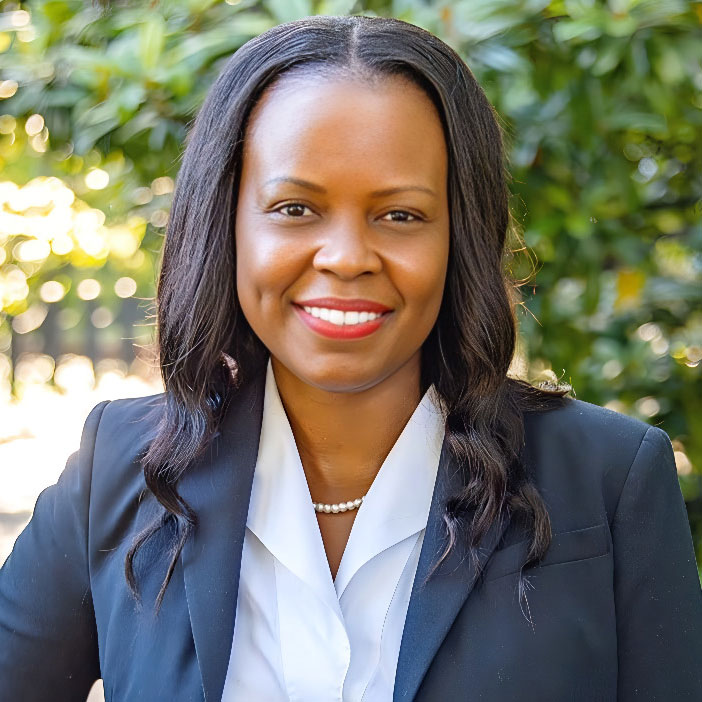 Congratulations to Angela Crosland, right, director of communications for the South Carolina School Boards Association, who recently earned her Accreditation in Public Relations (APR). Angela worked diligently to achieve this credential, which demonstrates her mastery of public relations theory, practices and ethics.
Q. What made you decide to earn your APR?
The APR had long been a personal and professional goal of mine, inspired by respected leaders in the field. The process once felt daunting, but a statewide civility initiative developed by the S.C. School Boards Association with the Municipal Association created the right opportunity. The initiative aligned closely with my strategic communication objectives and became the foundation for my panel presentation.
Q. When did you begin the process, and tell us a little about your decision to take the online classes. What is their value?
Q. What advice would you give someone who is considering this?
A mentor or coach brings tremendous value. Kathleen emphasized skill mastery and effort, and her belief in my success strengthened my motivation, confidence and resilience. Completion of the process may not have been possible without her guidance. The best advice I would give is to work with a mentor or coach who is invested in your success and follow their direction with consistency.
Q. What value do you think the APR credential brings to you and your career?
The credential provides a way to demonstrate the value of work already in practice. Its difference lies in proving impact through measurable, systematic methods. The process sharpened my perspective on the organization I serve, its mission and the role of public relations in the marketplace, reinforcing both professional practice and leadership credibility.
If you are interested in finding out more about earning your APR, please contact Accreditation Chair Kathleen Williams at [email protected].
We're proud of our members who have achieved the APR distinction and have been inducted into the PRSA College of Fellows:
Denise Blackburn-Gay, APR, Fellow PRSA
Stacy Elaine Boyce, APR
John R. Brooks, APR
William Lee Bussell, APR
Mary Anne Byrd, APR
Amy T. Coward, APR, Fellow PRSA
Ted Creech, APR
Angela Crosland, APR
Joan Damico, APR
Donyelle K. Davis, MA, APR+M
Kelly J. Davis, APR, Fellow PRSA
Ashley M. Dusenbury, APR
Ian Dyke, APR
Mary E. Eaddy, APR, Fellow PRSA
Angela Parker English, APR
Martha A. Gaston, APR
Keela Glover, APR
Staci L. Gouveia, APR
Beth H. Hallisy, APR, Fellow PRSA
Alice Grey Harrison, APR
Brooks Hearn, APR
Julie J. Horton, APR
George L. Johnson, APR, Fellow PRSA
Shawn McGee Kahle, APR
Tamara Mungin King, APR
Laura A. Kirkpatrick, APR
Mandy McMahon, APR
Padgett Singleton Mozingo, APR
Tiffany Norton, APR
Karen Potter, APR
Marcia Purday, MBA, APR
Robert L. Reeves, APR
Libby Roerig, APR
Andrea Simrell, APR
Charlene D. Slaughter, APR
Beth Thomason, APR
Erin Smith Watson, APR
Ansley Jeffcoat Welchel, APR
Kimberly (Kim) Wellman, APR
Jennifer Lynne Williams, APR
Kathleen Burke Williams, APR


